
DTS can help increasing the efficiency of alternative energy sources and, therefore, contribute to the European Green Deal
Becoming the world’s first climate-neutral continent by 2050 is a once in a lifetime opportunity to modernize the EU economy and society and re-orient them towards a just and sustainable future.
This project will remove barriers to the widespread use of fibre-optic thermometry in various sectors by providing novel, traceable temperature measurement solutions where temperature measurement and control play a key role but are inaccessible to conventional electrical methods. This will make the energy infrastructure more resilient and reliable in the face of future challenges. In addition, this project will strengthen fibre-optic temperature measurement manufacturers and service providers in Europe.
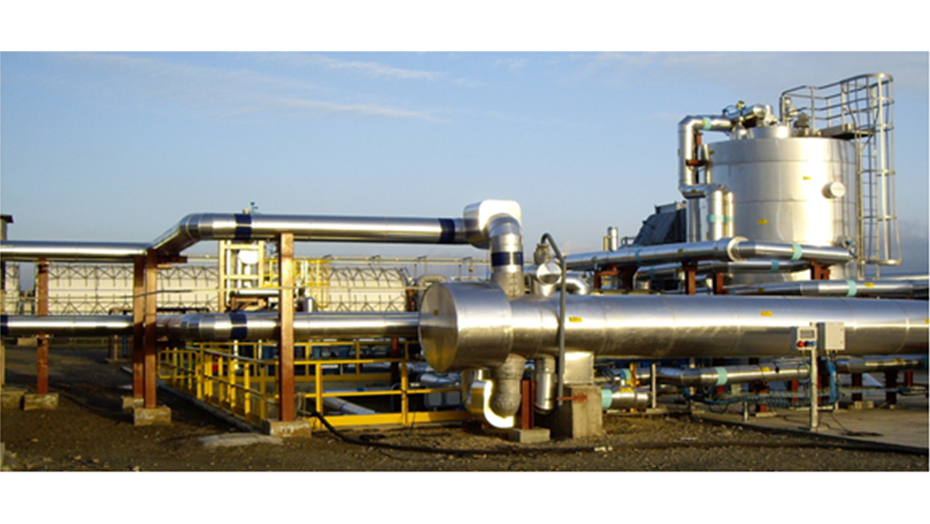
Molten salt as energy storage system
Advances in renewable energy production require an efficient and sustainable energy storage system. The Plataforma Solar de Almeria (PSA) in Almería, Spain is a research centre owned by the Centro de Investigaciones Energéticas, Medioambientales y Tecnológicas (CIEMAT) whose main goal is the development and testing of new technologies based on solar energy.
The focus for this test will be the thermal storage tanks found there. The purpose of these infrastructures is to store large quantities of molten salt, saving the energy produced in concentrated solar power plants.
Measuring of temperature
One of the key issues is properly measuring the temperature of the contents inside the tanks. Traditionally, thermocouples have been used for this purpose. The INFOTherm project proposes to replace this outdated temperature monitoring configuration with a new distributed temperature sensing (DTS) system based on fibre optics. The Centro Español de Metrología (CEM) and CIEMAT are responsible for this activity.
Some of the advantages of installing a DTS system include achieving a temperature resolution of tenths of a degree with a spatial resolution of less than a centimetre. This means that in five metres of fibre, we would obtain more information than with fifty thermocouples distributed over the same length. Another advantage is that thermocouples require cumbersome and difficult-to-maintain wiring and connections, whereas with a DTS system, we only need a fibre and a stand-off cable to connect the sensible fibre to the interrogator, which is the device used to stimulate the fibre to obtain the temperature measurements. As a result of this substitution, we expect a reduction in cost and occupied space, along with an increase in spatial resolution, all without compromising the quality of the measurements.
Calibrating the fibre optics system
One of the biggest challenges is the calibration of DTS fibre optics system. CEM is firmly committed to developing DTS calibration facilities and exploring new protocols to perform the calibration. Their strategy consists of two stages.
In the first stage, influencing variables in controlled environments will be studied and characterized, evaluating the impact they could have on the measurements. This type of thermometers is very susceptible to strain in the fibre, harsh environmental conditions and vibrations.
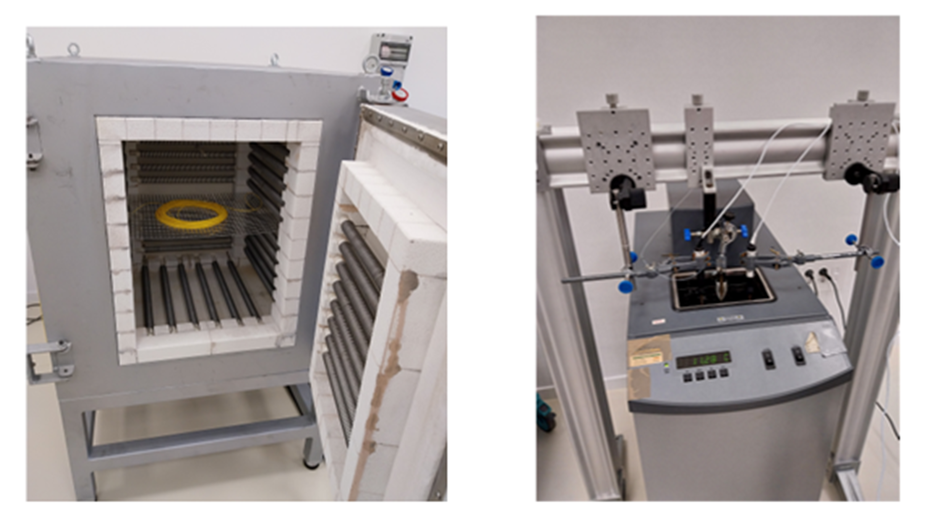
In the second stage, CEM will perform a calibration by comparison in the range of 0°C to 600°C using type R thermocouples and PT-100 thermoresistors, calibrated at fixed points up to aluminium (660,3°C), providing traceability to the measurements.
Installation in the tank
Another significant challenge is the installation of the fibre in the tank. Molten salt is highly corrosive and is in constant motion due to convection currents and pump suction at the bottom of the tank. The sensing fibres must be protected from the salt and placed in a location where the movement of the liquid is mitigated. Additionally, the protection must be chosen so that the differences between the protected fibre and the bare fibre are negligible.
In this project, it is planned to install the fibre through a stainless steel tube in the centre of the tank. However, in the future, other options may also be considered, such as attaching the fibre to the walls or the bottom of the tanks where temperature gradient induce thermal stress that may lead to tank rupture.
Evaluation and analysis of data
The expectation is to install the DTS in 2026. From that date, CEM and CIEMAT will focus on evaluating and analysing the data obtained, comparing it with the data from the previous monitoring system. If this project is successful, it is expected to result in a new calibration method and facilities for DTS systems calibration at CEM. Additionally, it will provide a way to simplify temperature monitoring in molten salt tanks, potentially opening a research line for CIEMAT on the use of fibre for energy loss quantification during storage. In the future, this could help in building more efficient storage tanks and components