
Advancing Understanding of Geothermal Reservoirs with Fibre Optic Technology
Contributor: Thomas Reinch
In the pursuit of sustainable energy solutions, the INFOTherm project is breaking new ground in geothermal energy research. Researcher Thomas Reinsch from the Fraunhofer Research Institution for Energy Infrastructures and Geotechnologies (Fraunhofer IEG), along with academic and industry partners, is leveraging innovative fibre optic technology to investigate geothermal wells. This work has the potential to significantly enhance the understanding of geothermal energy systems, paving the way for a more sustainable future.
Fibre Optic Technology in Geothermal Wells
To better understand downhole processes and improve the assessment of geothermal resources, the team has equipped several geothermal wells with fiber optic cables. These cables serve as a critical tool for monitoring well integrity, resource behaviour, and the dynamic processes that occur during the utilization of geothermal reservoirs for energy provision and storage.
"We are conducting measurements on suitable reservoirs and exploring various aspects, from well integrity to resource assessment and reservoir processes," explains Reinsch. "This involves installing fibre optic cables in wellbores and observing how they behave under the extreme conditions found deep underground."
The installation of these cables allows researchers to collect valuable temperature data over time, but it also introduces new challenges related to the long-term accuracy of measurements.
Tackling Temperature Measurement Challenges
A central focus of this INFOTherm project is ensuring the long-term stability and reliability of temperature readings. Once a fibre optic cable is installed in a well, it is often impossible to retrieve or recalibrate it due to installation practices or operational constraints. Over time, these fibres are subjected to high pressures, extreme temperatures, and chemical interactions, all of which can degrade their performance.
Reinsch elaborates, "We are investigating the degradation of fibre optic cables under these conditions and evaluate whether any observed changes affect the accuracy of recorded temperatures."
The ability to rely on temperature readings over years is critical, particularly for absolute temperature measurements. While relative temperature changes might be recorded with a good accuracy even after years, there are only limited options to evaluate the accuracy of absolute temperature readings due to fibre degradation. As Reinsch notes, "My hope is that the fibres show no signs of degradation. However, realistically, we expect some level of degradation, and the question is to what extent this will influence the data."
The Cost of Inaccurate Data
Inaccurate temperature readings in geothermal applications can have costly consequences. Erroneous data could lead to poor decision-making, impacting the economic viability of geothermal energy projects. For this reason, the INFOTherm project emphasizes quality assurance to ensure the data's reliability.
"Trusting the temperature measurements is essential," says Reinsch. "We need to ensure the data we collect can be relied upon, even after years of operation. This is not only important for the research community but also for operators of geothermal wells and regulatory authorities."
Broader Impact and Beneficiaries
The knowledge gained from this research has a threefold impact:
- Advancing research: By better understanding the processes occurring deep underground, researchers can refine models and improve their understanding of geothermal systems.
- Supporting operators: Geothermal well operators will benefit from more accurate cost projections and better resource management, enabling more efficient operations.
- Informing authorities: Reliable data provides authorities with the confidence needed to grant permits for geothermal energy storage applications, fostering the growth of this sustainable energy source.
A Path Towards Greater Confidence in Geothermal Technology
Fibre optic technology offers an unprecedented opportunity to collect real-time, high-resolution data from the otherwise inaccessible world deep beneath the Earth's surface. However, there is still much to learn about how these fibres behave under extreme conditions and how to use the data they provide effectively.
Reinsch emphasizes the importance of educating stakeholders about this technology: "There is still a way to go in increasing knowledge among those who apply these technologies. We need to help operators and regulators understand the confidence level they can place in the data and how to use this information to draw meaningful conclusions."
By addressing these challenges head-on, the INFOTherm project is laying a piece of groundwork for more reliable and efficient use of geothermal energy. With ongoing research and collaboration, this work promises to unlock new possibilities for sustainable energy storage and utilization.
Pioneering Calibration of High-Temperature Bragg Grating: Design and implementation of a calibration setup
Contributors : Sylvain Magne, Thomas Blanchet (CEA List, Saclay, France), Christophe Journeau (CEA DES IRESNE, Cadarache, France), Frédéric Bourson, Mohamed Sadli (CNAM, Saint-Denis, France)
Scientists from the INFOTherm project are pushing the limits of temperature sensing technology by developing an innovative system for calibrating Fiber Bragg Gratings (FBGs) beyond 1000°C. Such system will contribute to provide accurate traceable measurements for many industrial applications of FBGs in harsh environments like aerospace, energy production, and advanced manufacturing.
Objectives
Within the WP3 of the INFOTHERM Project, CEA List, CEA DES and LNE-CNAM collaborate on the implementation of a dedicated technical setup and calibration protocol for high-temperature FBGs photowritten in silica fibres. The objectives are first to calibrate Fibre Bragg Gratings (FBGs) sensors up to 700 °C and to assess for drift over a minimum time span of 500 hours (4 weeks). The targeted uncertainty is ± 1 °C. Then, a similar experiment will be performed up to temperatures higher than 1000 °C (no uncertainty is targeted over this range).
Accurate calibration over the expected temperature range as well as the assessment of long-term temperature-assisted drift are issues of prime importance in view of future industrial use. High-temperature FBGs written in silica fibres are typically used up to 1200 °C (world record: 1295 °C) on short-term (minutes), and up to 900 °C to 1000 °C on long-term (years). However, the sensor response is expected to drift at such temperatures on account on dopant migration, stress relaxation and recrystallization.
Fibre Bragg Gratings (FBGs)
Both regenerated (type-R) and type-III gratings are considered for evaluation.
Type-R gratings are obtained through an annealing process of hydrogenated type-I gratings (inscribed in photosensitive H2-loaded fibres with a low-power laser) at high temperatures in the range [650 °C – 950 °C]. Although the physics of the regeneration process is still not well understood at present time, type-R gratings are yet commercially available and used in industrial applications. It is believed that silica undergoes a phase transition from glassy to crystalline state (cristobalite), such change being seeded by UV-light.
Type-III gratings are obtained by the point-by-point method using a femtosecond laser as the fibre is moved under the laser beam at a constant repetition rate (FemtoBragg platform of CEA List). The beam is focused inside the fibre core and each laser pulse creates a nano-void. The grating period is adjusted by proper combination of fibre speed and pulse repetition rate. Most type-III gratings are interrogated at high diffraction orders (typically higher or equal to 2). Both index profiles of type-R and –III FBGs are thus of structural origin, accounting for their stability at high temperature.
Calibration protocol
LNE and CNAM are worldwide-renowned specialists in temperature measurements and calibration protocols. Part of their mission is to provide temperature references to national metrological institutes and industry. Within INFOTHERM WP3, they are committed to calibrate the FBGs provided by CEA. This will be performed using a transfer radiation thermometer calibrated against the fixed points of zinc (419.53°C), aluminium (660.32°C), silver (961.78°C) and copper (1084.62°C). These temperatures are defined at the solid-to-liquid transition measured by the radiation thermometer with an uncertainty of less than 0.02°C.
The experimental setup consists in a graphite equalisation block (figure 1) in which the FBGs, inserted in 4-hole alumina capillaries, are introduced from the backside, while the radiation thermometer from the front side measures the temperature. This first graphite block is settled in a quartz tube (Figure 2) into which an argon flow is injected to prevent graphite oxidation. A second graphite block, placed in another parallel furnace placed nearby, hosts the fixed points. The radiation thermometer is regularly calibrated against the fixed points. To do so, it is mounted onto a translation stage and periodically switched back and forth between the sensing block (FBGs) and the reference block (fixed points).
Figure 3 shows the installation of both furnaces from the FBGs side.
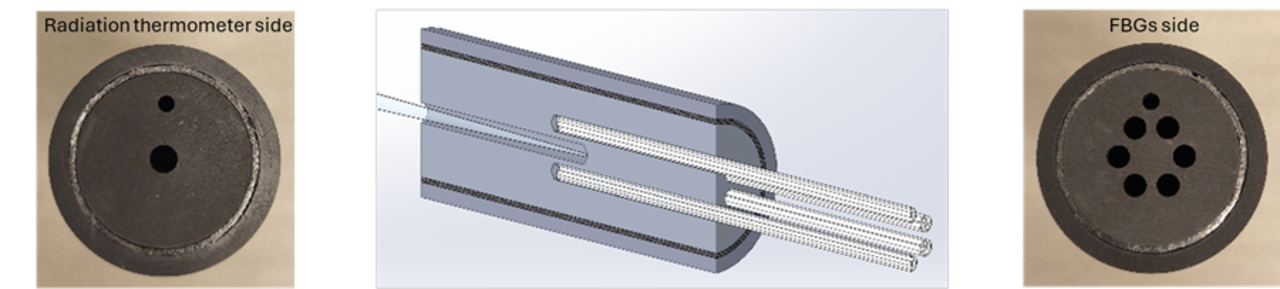
Figure 1: Graphite equalisation block designed by LNE-CNAM

Figure 2: System maintaining the graphite equalisation block and the FBGs (design LNE-CNAM)
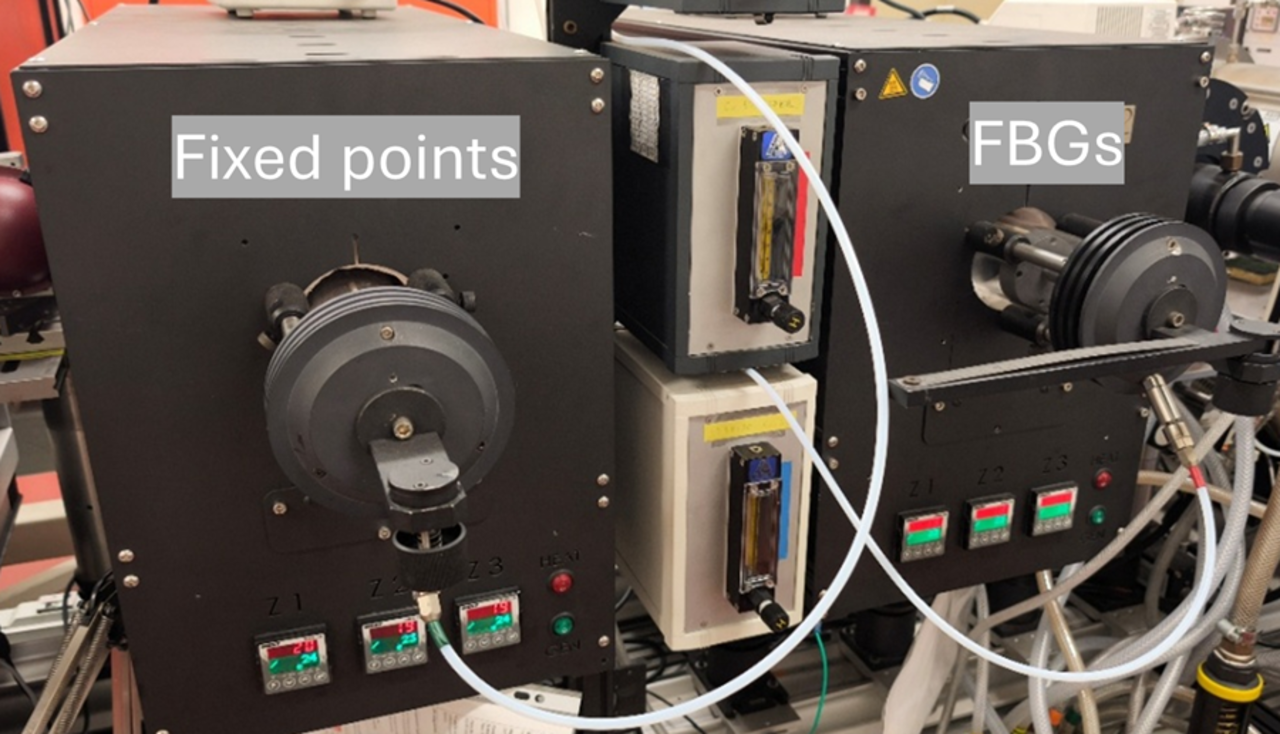
Figure 3: Back side of the furnaces and open access for FBG sensors